


On the Costa Blanca the useful question is not whether cannabis associations exist. It is which of them is what it claims to be. This coast has the most documented enforcement record of any Spanish cannabis-club market, and the pattern in it is worth reading before you join anything. Law stated as at 21 August 2026.
What the Guardia Civil said on the record
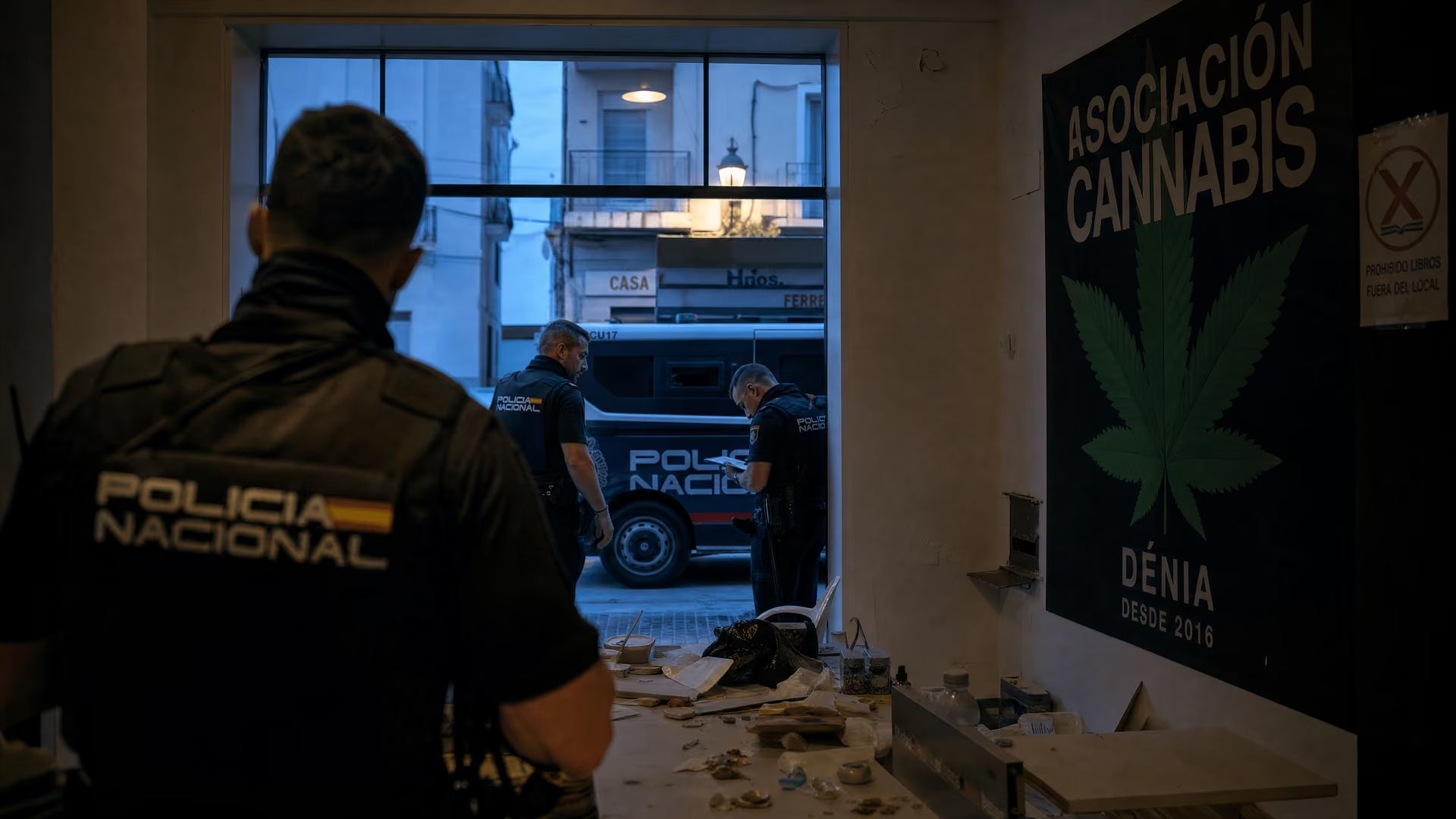
In June 2023 a Guardia Civil lieutenant described Torrevieja going from two or three cannabis clubs to more than fifteen in five years, and estimated that around nine in ten were engaged in illicit activity. That figure is a police estimate rather than a measurement, and it should be read as one — but it came with an operation attached: seven clubs dismantled, nineteen people arrested across eight nationalities, some €120,000 of drugs and €12,000 in cash seized.
The recurring findings were administrative and dull: no membership register, no accounts, no documentation produced on inspection. Not exotic criminality — an absence of the ordinary paperwork a real association generates.
What actually gets a club closed on this coast
The evidentiary tells are consistent enough to list, and they are almost all about behaviour rather than substance.
- Advertising online, or on social media, that a place sells cannabis.
- Public reviews that describe buying rather than describe a members' club.
- Customers entering and leaving far too quickly to have consumed anything on the premises.
- Visitors intercepted outside, carrying product, who say where they bought it.
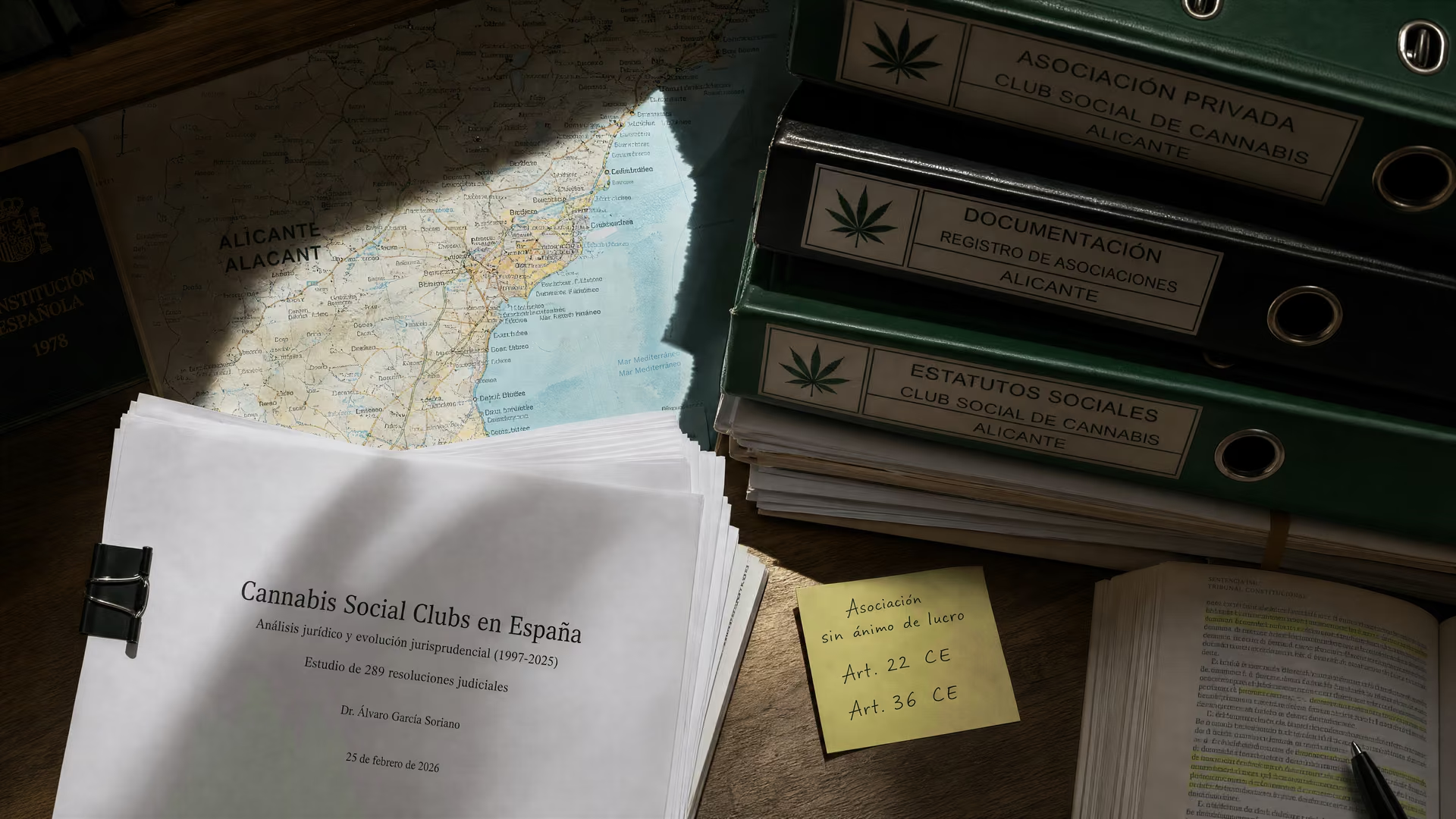
- No municipal licence, and no entry in the Registro de Asociaciones de la Comunitat Valenciana.
In July 2023 the Policía Nacional closed a centrally located false club in Benidorm that had been selling to foreign tourists — no licence, not on the register. In August 2026 a club in Altea was closed after its managers advertised sales on social media. Both fit the list above exactly.
The law those operations are enforcing
An adult may consume and possess cannabis in a private place. That is decriminalised, not legalised — no offence, but no right, and no lawful way to buy any. In STS 484/2015 the Supreme Court held in plenary that organised cultivation and distribution with a vocation of permanence, open to new members, is trafficking under article 368 of the Código Penal. It has restated that ever since, most recently in STS 328/2025, which added the separate offence of unlawful association.
A membership fee does not change it. Where payment scales with the quantity taken away and nobody controls what happens next, the courts read a sale — whatever the paperwork calls it.
The registry is a signal, not a licence
Entry in the Registro de Asociaciones de la Comunitat Valenciana is declarative: it records that an association exists and publishes its statutes. It confers nothing on cannabis activity. But its absence is informative, and police plainly treat it that way — in the Benidorm and Torrevieja cases the missing registration was reported alongside the missing licence. A club that can show you neither has answered a question you should have asked.
The same goes for the endorsement and the waiting period. No Spanish law requires either; they are association custom. They tell you how carefully a place is run, not whether it is lawful.
Outside the door, in a resort town
Consuming or carrying cannabis on a street, a promenade, a beach or a bus is a grave administrative infraction under article 36.16 of Ley Orgánica 4/2015, and the grave band runs from €601 to €30,000. It applies whether or not the cannabis was destined for anyone else.
This matters more in Benidorm, Torrevieja, Calpe, Santa Pola and Orihuela Costa than almost anywhere, because the walk between a club and an apartment is short, public and busy — and because the tourists intercepted outside clubs in the operations above were intercepted doing precisely that walk. A membership card is worth nothing one step past the association's door. Our safety guidance has the rest.
What this directory is, and what it is not
This is an information directory. It lists associations across Alicante province — Alicante city, Benidorm, Torrevieja, Elche, Dénia, Xàbia, Calpe, Altea — and it sells FastTrack: a club's address and contact details, delivered to you. It does not sell cannabis, it does not sell membership, and it cannot get you admitted anywhere. Start with the club search, the map, or the frequently asked questions.
A listing is information about a venue. It is not an endorsement, and it is not a statement that the venue operates lawfully.